
Knee Arthritis Treatment
Genicular artery embolization for knee pain
Minimally invasive treatment for chronic knee pain
Understanding knee osteoarthritis
Knee osteoarthritis occurs when the protective cartilage that cushions the ends of bones gradually deteriorates. Cartilage normally allows the joint to move smoothly and absorb impact during movement. As it breaks down, the bones in the knee may begin to rub together, which can lead to pain, stiffness, inflammation, and limited movement.
While osteoarthritis is often associated with aging, other factors such as prior injuries, excess body weight, or genetics can also contribute to its development. Knees are among the joints most commonly affected by this condition.
What Is Genicular Artery Embolization (GAE)?
Genicular Artery Embolization (GAE) is a minimally invasive procedure used to help relieve chronic knee pain, particularly when osteoarthritis is the cause. It is performed by an interventional radiologist who uses advanced imaging to guide specialized instruments through the blood vessels. Because the technique does not require large incisions, patients typically return home the same day. GAE is designed to reduce inflammation in the knee joint and provide relief for patients who have not found success with medications, injections, or other conservative treatments.
Interventional radiology can be used to treat a variety of urologic and urogynecologic conditions. Learn more about other procedures.
How the procedure works
GAE is typically performed in an outpatient setting using local numbing medication and light sedation. During the procedure, a physician inserts a small catheter into an artery and navigates it toward the arteries that supply blood to the inflamed lining of the knee.
Once these vessels are identified, microscopic particles are delivered through the catheter to partially block the abnormal blood flow contributing to inflammation. By decreasing circulation to these inflamed tissues, the procedure helps reduce swelling and pain within the joint
Benefits of GAE
Many patients choose genicular artery embolization because it offers several advantages compared to traditional surgery:
Minimally invasive outpatient procedure
- No hospital stay required
- Uses local anesthesia instead of general anesthesia
- Short recovery time with a quick return to daily activities
- Helps decrease inflammation and knee pain
- May delay or help patients avoid knee replacement surgery
What results can patients expect?
Relief from knee pain varies from patient to patient, but many individuals experience noticeable improvement for several months to multiple years after treatment.
GAE does not cure osteoarthritis, but it can significantly reduce inflammation and discomfort while helping patients maintain mobility and independence. In some cases, the procedure can be repeated if symptoms return.
Non-surgical knee pain relief
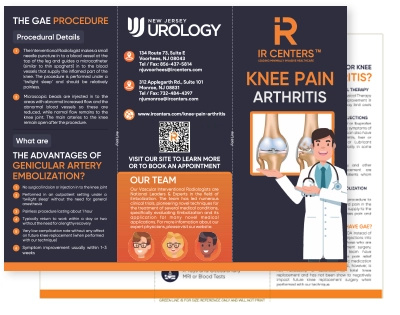
IR Centers at New Jersey Urology
Reminder: You currently need a referral from your NJU physician.
To see if you’re a candidate for one of our IR procedures, contact your NJU physician or find a provider.
Monroe location
312 Applegarth Road
Suite 101
Monroe, NJ 08831
Phone/Fax: (732) 484-4397
Email: njumonroe@ircenters.com
Voorhees location
OPENS IN OCTOBER
134 Route 73, Suite E
Voorhees, NJ 08043
Phone/Fax: (856) 437-5814
Email: njuvoorhees@ircenters.com