
Uterine Fibroids
Uterine fibroids are benign, non-cancerous growths into the walls of the uterus, or womb.
These fibroids can range from less than an inch to more than six inches in diameter. Most fibroids don’t cause symptoms and are only discovered during a routine pelvic examination.
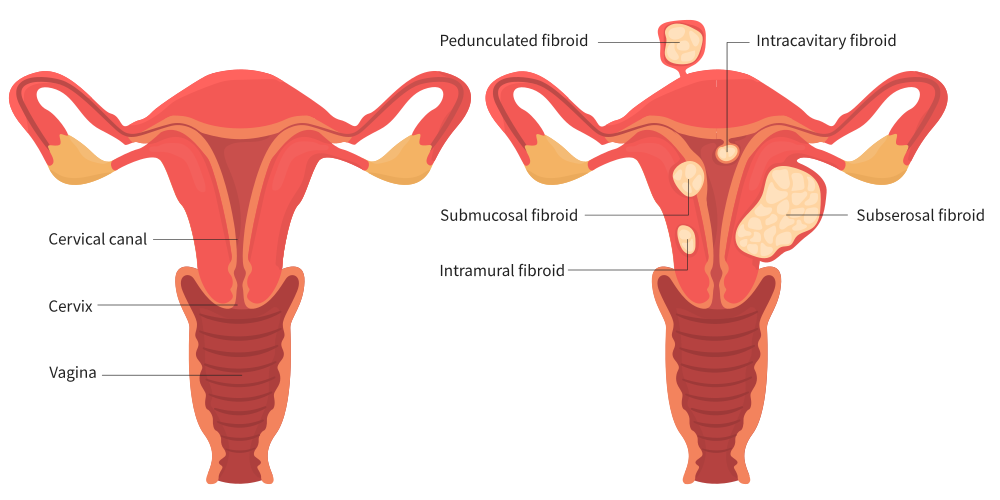
What symptoms can uterine fibroids cause?
- Heavy, prolonged menstrual periods
- Pain or pressure between the hip bones or in the back of the legs
- Frequent urination
- Pain during sexual intercourse
- Constipation or bloating
- An enlarged belly and/or protruding abdomen
What are the treatment options for uterine fibroids?
- Medicine: NSAIDS, birth control, IUDs, hormone injections, iron supplements
- High-intensity ultrasound: Ultrasound waves penetrate the abdominal wall and heat fibroid tissue, causing the fibroid to shrink
- Endometrial ablation: Removal of the lining of the uterus to reduce bleeding
- Radio frequency ablation: Energy is delivered through a probe to damage the fibroid
- Myomectomy: Surgical removal of fibroid tumors
- Hysterectomy: Surgical removal of the uterus
- Uterine fibroid embolization: minimally invasive alternative to surgery that blocks blood flow to the fibroids, causing them to shrink. This outpatient procedure is done in our Interventional Radiology Centers
Advantages of uterine fibroid embolization
- No incision or scar
- Quicker recovery time (1 to 2 weeks compared to 6 weeks for surgery)
- Treat multiple fibroids at once
- Less risk than surgery
- The uterus is spared
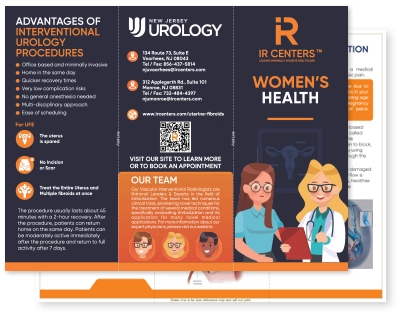
See a full directory of general and specialized urology services provided by New Jersey Urology.
Don’t suffer in silence. Schedule a consultation and get the care you deserve.
To learn more, contact a provider or one of our locations — or schedule an appointment.
IR Centers at New Jersey Urology
Reminder: You currently need a referral from your NJU physician.
To see if you’re a candidate for one of our IR procedures, contact your NJU physician or find a provider.
Monroe location
312 Applegarth Road
Suite 101
Monroe, NJ 08831
Phone/Fax: (732) 484-4397
Email: njumonroe@ircenters.com
Voorhees location
OPENS IN OCTOBER
134 Route 73, Suite E
Voorhees, NJ 08043
Phone/Fax: (856) 437-5814
Email: njuvoorhees@ircenters.com